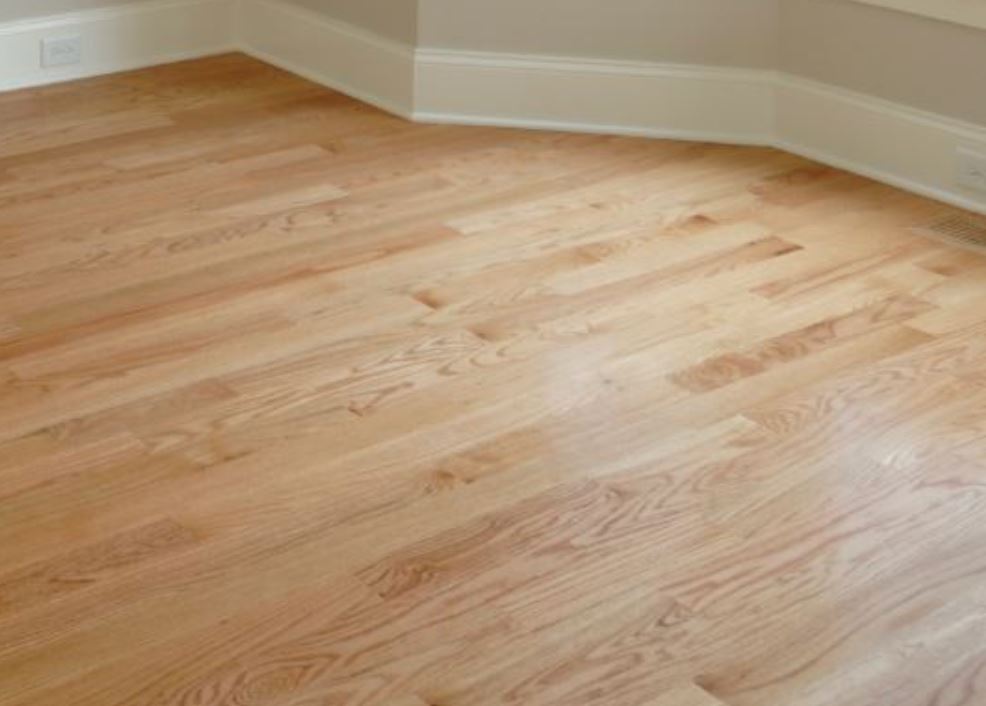
We are huge fans of the Osmo hard wax oil approach to timber floors. This approach guarantees ease of maintenance and ease of repair. However we also sell waterborne finishes. There are two different looks that you need to consider when choosing a timber floor coating.
The two approaches create a different look and feel to the timber floor.
The Osmo hard wax oil approach gives you a more natural looking floor while the waterborne polyurethane finish gives you a coated floor and allows for a higher gloss or a very different look.
It is very important to take a look at this.
For a few minutes let’s consider the whole reason for waterborne polyurethane and then consider the forward compatibility issue that is arising.
There are a number of approaches to selecting coatings for use on timber floors. In times past, and especially last century, solvent based glossy polyurethane finishes were very popular and provided a thick durable plastic coating to the floor.
It was a very specific look and given that there was often not a lot of light coming from very large windows in those days it was an appropriate choice.
However, as windows became bigger and more light was cast on the floor the whole approach of a gloss finish became an issue and it was necessary for coating manufacturers to make subdued gloss finishes.
Enter Satin and Semi Matte
Satin and semi-matte finishes became very popular and as windows became larger and the idea of glass patio walls was introduced, these lower sheen finishes were part of the answer.
Some companies even went so far as to produce a matte finish. However, polyurethane finishes in subdued gloss levels are easily affected by climatic conditions and in colder temperatures even these subdued gloss finishes could sometimes dry with a very glossy finish.
Yellowing!
One of the key issues with solvent based finishes is that the product is made from materials that yellow with age. Even directly out of the tin there is some straw looking or yellow look to the finish. As the products age they turn yellow and can take on a severe yellow. This a light looking floor can easily take on a very solid yellow look overtime.
None Yellowing Finishes
The key advantage to Waterborne finishes is the fact that they do not naturally yellow. Waterborne finishes will dry with a much more even look and is it possible to produce very good quality matt and satin finishes.
These finishes will not turn yellow as they age. It’s worth repeating that, waterborne finishes themselves do not turn yellow with age.
This is a distinct advantage to the waterborne approach to coating timber floors. In Western Australia we have a lot of the Western Australian Timber Jarrah which is beautiful. If you put a yellowing finish over the top of the red looking floor you end up with an orange floor. If you put a water based finish over Jarrah you will maintain the colour.
Key Advantages of Waterborne Finishes
- Keeps the floor lighter
- Non Yellowing
- Full Range of Subdued Matt and Satin finishes
- Forward Compatibility
The Industry Is Changing
The whole approach to coating timber floors is changing as we move into a much more environmentally responsible age.
Waterborne Coatings are the future in terms of polyurethane finishes. In fact single pack waterborne Coatings are poised to take over a whole section of the future in floor coating.
We make no apologies in presenting the truth as far as this is concerned because we are fans of the environment approach both in terms of hard wax oils and Waterborne Coatings.
Our Osmo range of hard wax oils is without comparison. It is simply the best. In the field of waterborne coatings our range of Bona Coatings is the same. They are simply the best.
By switching to either the waterborne coating from Bona or a hard wax oil coating from Osmo, you are essentially future proofing your floor because you are introducing a system that is forward compatible.
In time you will not be able to purchase certain solvent systems. This is no joke and an important fact to take into account. In fact, we’ve already seen that certain ingredients used in solvent base coating have been withdrawn from the market for a number of reasons which is why a number of coatings are no longer available or no longer able to be manufactured.


 vcs floorworks PERTH everything for flooring
Leave a comment