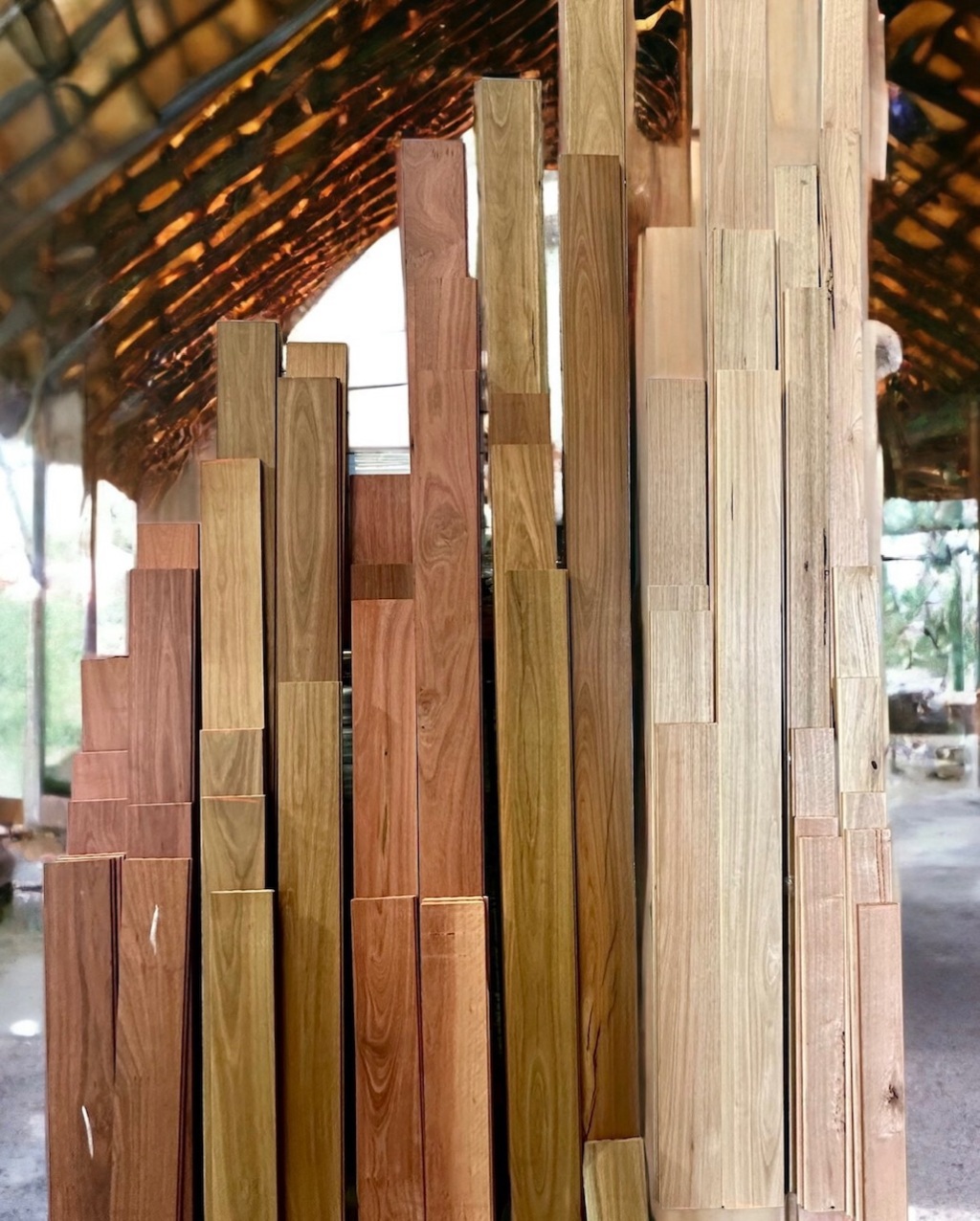
The Janka scale, also known as the Janka Wood Hardness Scale, is a range of numbers that determine the density and resistance to dents and wear of different types of wood. It measures the force required to embed a 11.28 millimeters (0.444 inches) diameter steel ball halfway into a sample of wood. The higher the Janka rating of a wood species, the more resistant it is to denting and wear. This scale helps in determining the suitability of wood for various applications, such as flooring, based on its hardness. Different wood species have different Janka ratings, with higher ratings indicating greater hardness and durability.
The Janka rating of Jarrah wood, commonly used in flooring, is around 1910 lbf (pound-force) on the Janka scale. This high Janka rating indicates that Jarrah wood is very hard and durable, making it a suitable choice for flooring where durability and resistance to wear are important factors.
Interestingly, one of the most used timbers used in flooring is oak. It is estimated that 50% of timber floors around the world use some form of oak. This helps to set the benchmark for the Janka rating.
The average Janka rating of oak flooring can vary depending on the specific type of oak (e.g., red oak, white oak) and region. In general, red oak has a Janka rating of around 1290 lbf (pound-force), while white oak has a Janka rating of around 1360 lbf. These ratings indicate that oak flooring is relatively hard and durable, making it a popular choice for flooring material due to its strength and resistance to wear.




 vcs floorworks PERTH everything for flooring
Leave a comment