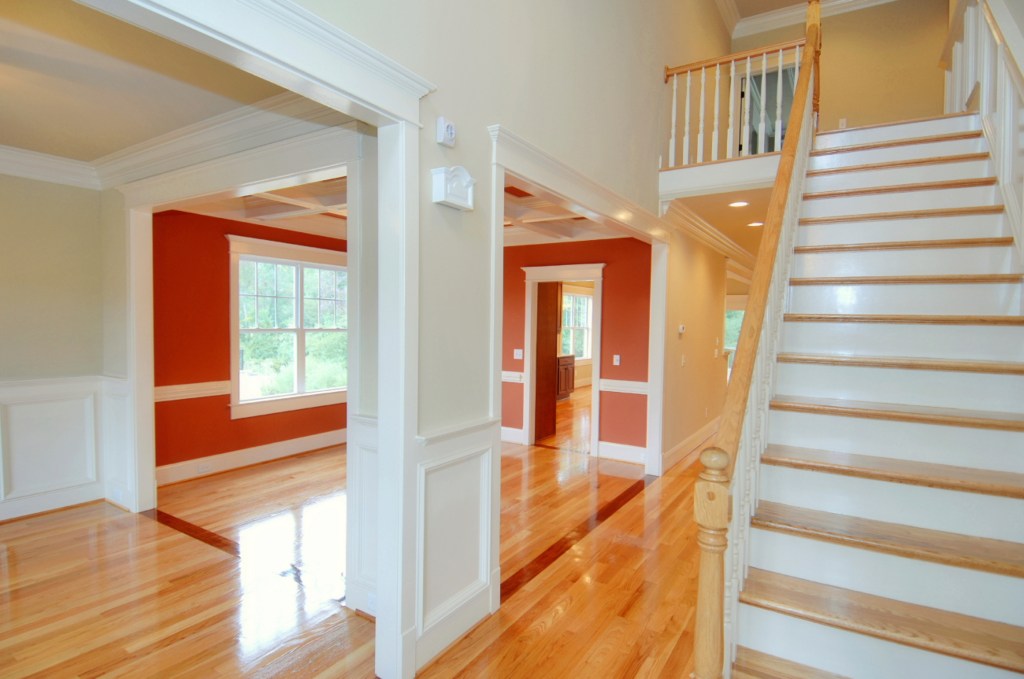

Yellow floors… it’s not a great look on timber. As solvent based finishes age the floor turns yellow and keeps going. The price up front might sound cheap but the long-term look of the floors leaves a lot to be desired. This is why so many people choose either a waterborne coating or OSMO 3065 Semi-Matte finish for their floors. Or else 3044 raw from the OSMO range. Using the right coatings can severely reduce the yellowing in the timber. Yellow loses the look of the floor.
How To Avoid a Yellowing Floor

Not so many years ago the high-gloss finish was the finish of choice for many people having timber floors.
Several things changed in home construction that caused people to rethink their approach to glossy finishes on timber floors. The glossy floor became popular when hot houses were smaller, and windows were equally smaller because wall space was a premium. Over the years however there’s been a gradual increase in the amount of square meters per person that are incorporated into houses in Australia. While at one time a 120 m² house was acceptable for a family with four children, these days even a house with twice that meterage is often considered a squeeze for the same size of family.
The last statistics that we looked at in Australia suggested that the average meters squared per person has grown to over 60 m². With larger houses comes greater wall space and a greater opportunity to have large windows. In fact it is not uncommon to find houses where the majority of the rear of the house is made of glass. This brings a lot more light into the home.

When windows were smaller and there was less light falling onto the floor directly it did not highlight the imperfections or dust particles on the floor. But as the light source increased and people used glossy floors, they began to notice that they were cleaning much more often, and they also picked up on any imperfections in the face of the timber more easily and obviously.

The gloss finish.
So the request went out for more subdued finishes. Initially this was somewhat difficult because solvent-based finishes still have a thick plastic film and the only way to really achieve a reduced gloss finish was to introduce what was called a dulling agent or matting agent into the gloss finish which in turn reduced the amount of reflected light. The floor still looks like plastic, however. This technology continues to be available in Australia and in it is when people see the comparison between the solvent finish and waterborne finish that they realize that waterborne finishes look much more natural and much less of a look of plastic.
Another distinct advantage of using a subdued gloss finish in a waterborne formula is the fact that waterborne formulas do not go yellow as they age. All solvent base finishes naturally take on a yellow color as they age and depending on the technology used some go markedly yellow as they age. To avoid the disappointment of seeing your floor yellow it is always good to avoid solvent base finishes.

Because of price pressure solvent-based coatings continue to be developed and manufactured in some parts of the world including Australia. However for the most part people are using waterborne technology and here at VCS we happily represent two main waterborne products.
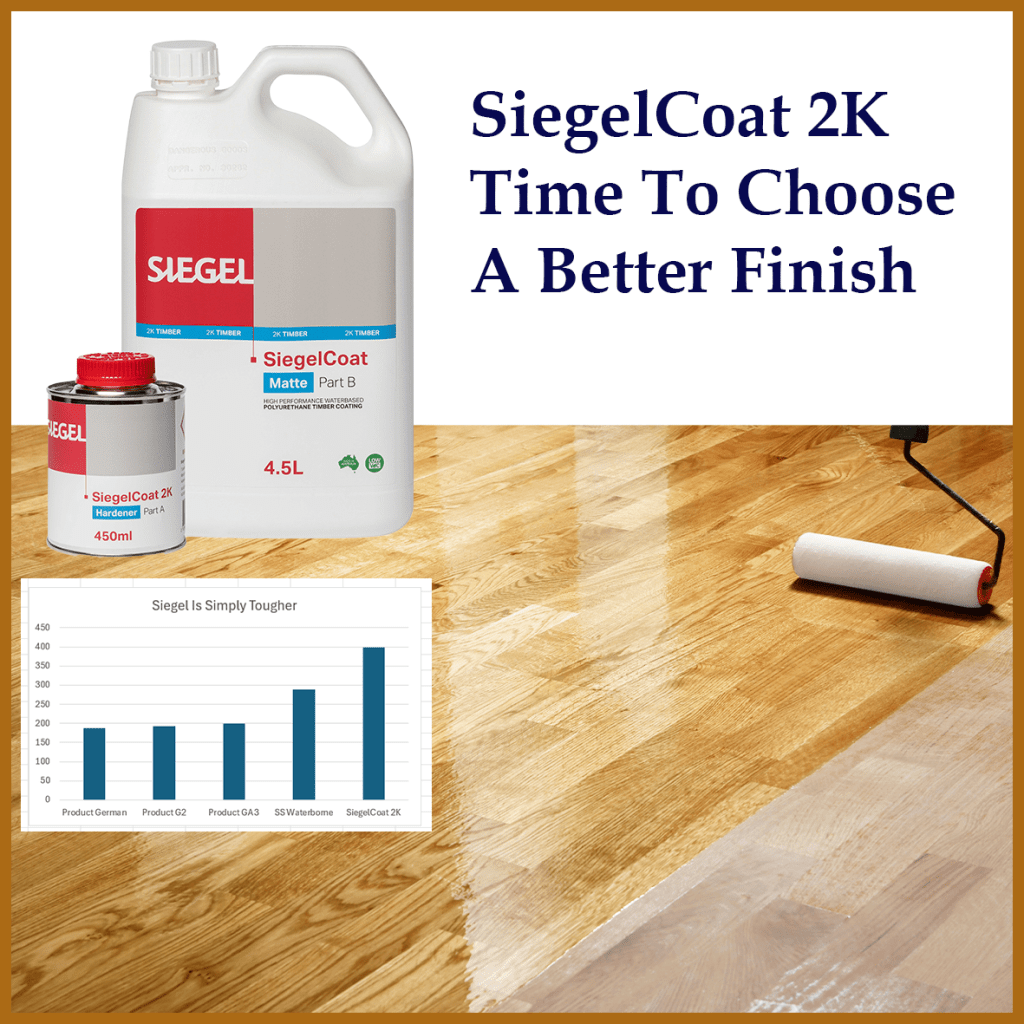
Waterborne coatings are very different to solvent-based coatings, and this can especially be noticed when it comes to chemical resistance. It is for this reason that we always encourage people to use two component finishes. This is because the use of a cross-linking additive gives the coating extra strength and durability and resistance to wear and tear. Over the last few years on-site testing by a number of manufacturers has demonstrated the truth of this here in Perth. There is nothing better than testing coatings in real-life domestic and commercial locations and all of the experience has identified the need to very strongly promote two-pack waterborne finishes.

The advantages of satin and matt finishes in waterborne coatings are therefore obvious. Firstly, they do not show or highlight any imperfections or wear and tear in the floor. Secondly, they do not have the yellowing effect that is associated with solvent-based finishes. And thirdly when you see a good quality waterborne finish on the floor you will see that the floor looks more natural and appealing to the eye.


OSMO RAW
At VCS, we offer a strong recommendation for the utilization of Polyx®-Oil Raw, particularly for its efficacy in mitigating the yellowing effect commonly observed in timber. This product is meticulously designed to preserve the authentic, untreated appearance of light-coloured timber, making it an ideal choice for timber floors, furniture, as well as interior features like panelling, sarking, and trim.
It is important to acknowledge that Osmo Polyx®-Oil Raw incorporates a minimal amount of white pigment, approximately 2%, which is strategically used to counteract the undesirable ‘wet-look’ that can manifest after the application of a clear finish. This attribute, however, renders the product less suitable for use on darker timbers, particularly those that are brown or red in hue, as the white pigment may alter the natural coloration of these materials.
In summary, Polyx®-Oil Raw is a highly recommended product for light-colored timbers, designed to maintain their natural aesthetics while providing protection and durability. Its specific formulation is not appropriate for darker timbers due to the inclusion of white pigment.


 vcs floorworks PERTH everything for flooring
Leave a comment