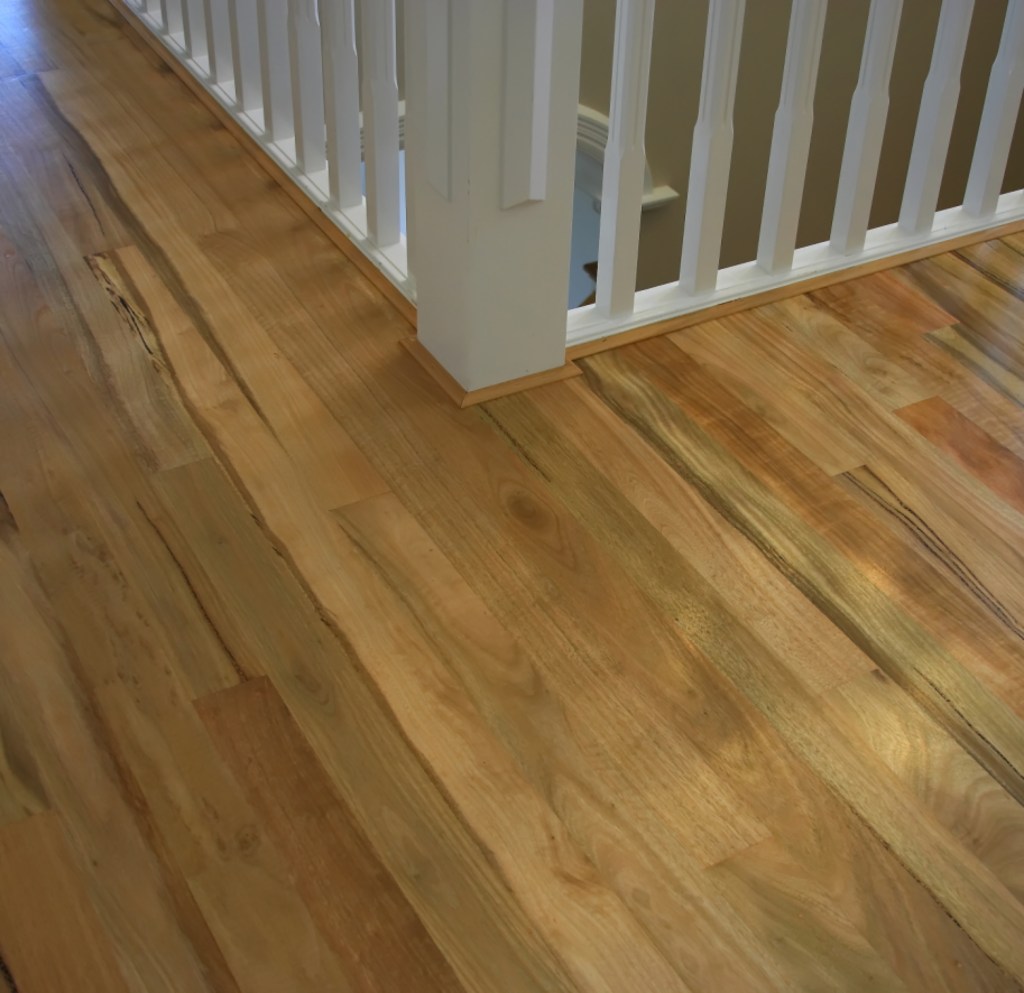
Timber products naturally have earthy tones in their makeup. Therefore when selecting a timber it is good to have tones that tie-in with other colors in the home. Also consider lighting; a darker floor where there is insufficient light can make rooms feel small whereas in modern houses with floor-to-ceiling windows a dark timber can be successfully used. Consider how the room will be used; if there will be a lot of wear choose a timber from the harder end of the spectrum and also consider coatings that are rated for durability. Also it is good to consider the gloss level of the coatings that will be used as a high-gloss, while still considered attractive by some, does tend to show dust very quickly. When selecting timber it is good to see a timber with a satin or subdued gloss finish prior to making your final selection.
When selecting the timber you also be introduced to grades of timber. Several years ago this grading was a relatively simple process as grades were essentially either select grade, standard and better grade or feature grade. Today the situation is somewhat different as a variety of grades and references are on offer. Essentially grading relates to the amount of gum vein or features that may appear in the surface of the timber. It has been a consistent practice that grading does not refer to the structural nature of the timber. Timber is always sold appropriate for purpose. Therefore when looking at grades this should not affect the machining. Sometimes timber is offered for sale with substandard machining and this is brought to the attention of the purchaser. The floor will still go together but will take a little more time to install. [It is for this reason the timber may be offered at a budget price.] Therefore when pricing timber the more expensive timber will generally have fewer, if any features in the face of the timber being; gum veins, knots etc.
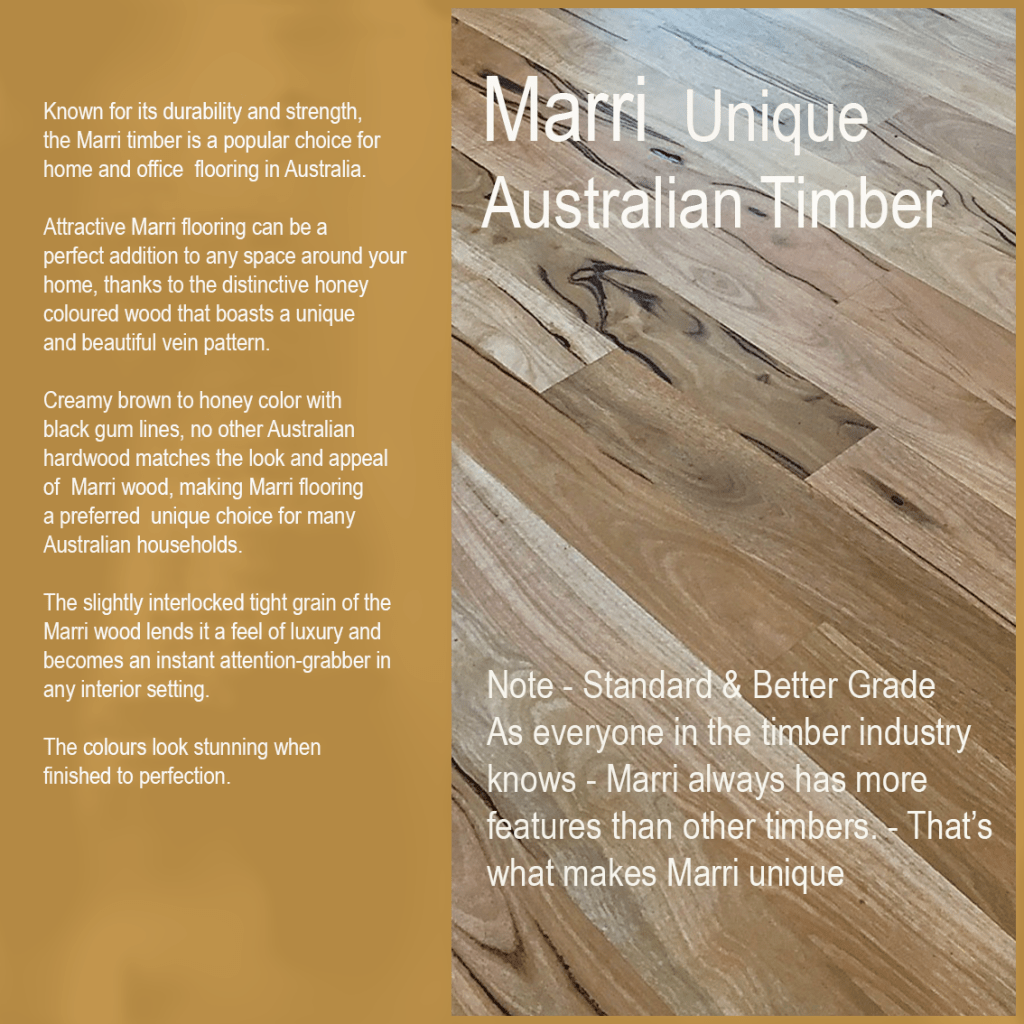
The most consistently sold timber generally does have some gum vein to the face being either standard and better grade or feature grade. Sometimes it has been said that totally clean timber doesn’t quite look as natural as the lesser grades of timber appear to be. There is some truth in this. It is nice to see some of the natural features in the timber. Therefore when purchasing timber that may be offered with a “grade” it is important to inquire as to how this rating is achieved. Usually the manufacturer will quote a figure in percentages; for example grade 70% clear/30% natural. Where you don’t actually want any feature you should look for the highest clear rating possible. There are exceptions as some timbers such as Australian Marri have much more feature naturally which is part of its appeal and therefore the grading will always look different. With most clean timbers though a cleaner grade is usually possible. Conversely it is good to be aware that where high percentages of natural are quoted there will be a lot of gum vein or features in the floor. This may suit a cottage style house but won’t suit everybody. If looking at a feature grade floor it is important to see a reasonable area before making your selection.
There are some timbers that naturally include a lot of knots and with these timbers the better grades will include a significant quantity of knots. These are not regarded as a defect but a natural feature. Several countries around the world have adopted a whole range of standards and expressions to describe their choice in floor. Become thoroughly familiar with the meaning of expressions and do not be afraid to ask questions. You’ll often find helpful people who will explain all of your concerns for you because the timber industry is generally a helpful one.
In Australia Grading Follows a general pattern.
Although with mills disappearing now these grades are also disappearing as international manufacturers introduce new techniques.
Select 80-85% Clear plus 15-20% Feature
Standard and Better 60-70% Clear plus 30-40% Feature
Feature 40-50% Clear plus 50-60% Feature
In conclusion, when looking for a timber floor bear in mind that it is just that “a timber floor” and therefore the surface that will be subject to life. Unlike a piece of furniture it will take a veritable hammering from the life that passes over it. It will be subject to the seasons; all the various events in life and it will regularly require some form of maintenance even though that maintenance may be several years apart. A realistic, reasonable and sensible approach to looking for a timber floor will result in the floor of lasting beauty and character. Timber flooring is an excellent choice and certainly suited to the lifestyle in Australia and this region. Armed with even these few guidelines you should be able to make a reasonable selection.
 vcs floorworks PERTH everything for flooring