Not so many years ago the only real polyurethane coating that was available in Australia was a solvent based gloss finish. It was a really tough and durable finish. Most people’s preference in those days was to have a two-pack solvent based gloss. The reason for this was that two-pack finishes have more solvent and are able to flow out more evenly to achieve a smoother looking and more even gloss finish. They are an extremely good-looking floor.
The problem with using two pack finishes was that there is a lot of waste. When you are coating a floor area of say 100 m², it’s very difficult to work out exactly how much finish that you will need because timber takes finish differently depending on its density and the way it has been sanded. As a result, rather than run out with for example 10 m² of floor yet to be coated the tendency was always to overmix, and the result of this was that there would always be half a litre or a litre of products left over at the end of coating the floor.
Enter Single Pack Finishes
The solution to this came in single pack solvent-based polyurethane gloss finishes. Now these were interestingly a very different breed of finish. Chemists worked out that it was possible to put a higher solid content of polyurethane into a can of a single pack finish. The result was a finish that was actually more durable than a two pack finish. This was because it had more actual polyurethane left behind on the floor when the solvents had evaporated.
There was also an additional benefit to doing floors this way. The additional benefit was that single pack polyurethane finishes are flexible whereas two pack solvent base finishes tend to be more stiff and rigid. All timber flooring moves to a greater or lesser degree and therefore having a flexible finish was a good idea. It also opened up the possibility of making subdued gloss finishes so that rather having a high gloss finish in every situation it was possible to make a polyurethane finish with for example a satin or semigloss finish.
In Australia at the same time there was a large take-up of using cork flooring. Cork tiles are an efficient, reliable and durable choice in flooring. In fact they are the most popular floor in large parts of the world because they offer benefits that simply are not inherent in using timber or ceramic tiles. Cork tiles naturally require a flexible finish to be applied to the face of the cork. Cork itself is flexible and therefore this also contributed to the take-up of using single pack polyurethane finishes.
Larger Windows
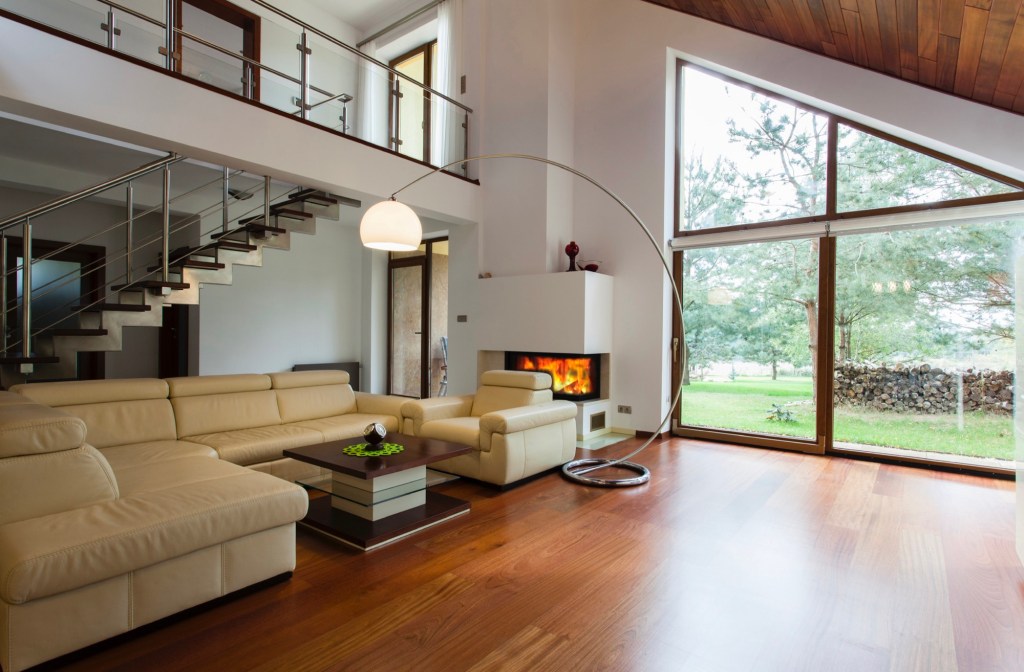
Australian housing was also going through a revolution which saw much larger windows being used in family homes. Bringing the outside inside was a popular idea in the 80s and 90s and we began to see lots more glass being used when it came to the rear of the house. Large sliding windows floor-to-ceiling windows and the like became popular. With this increased amount of light falling on flooring that has been coated in a glossy finish the effect was less than attractive. Glossy finishes reflecting lots of light meant that you were generally seeing the plastic floor rather than the beauty of the timber beneath the polyurethane. So, the pressure was on for manufacturers to produce solvent-based satin and semi-gloss finishes and even in some cases the pressure was on to produce matte finishes.
Sensitive Finishes
Solvent base finishes are affected to a greater or lesser degree by the temperature of the substrate to which they are being applied, the temperature of the atmosphere in which they been applied, airflow & the humidity level in the building. It soon became apparent that using solvent base finishes could result in variations of gloss. For example, there are many homes that were finished during that era which had a satin finish in most of the house, but by the front door had a much glossier finish. Airflow under the door at a lower temperature to the air in the house resulted in the surface of the polyurethane finishes drying with a glossy finish. Solvent base finishes in lower sheen levels are more susceptible to climatic conditions which can have a direct effect on the finished result.
Enter Waterborne Finishes
Around this time the first commercially viable waterborne finishes were being made available in Australia. These were two-pack formulations and were effectively a mixture of acrylic and polyurethane though there were some full urethane waterborne finishes arriving at the same time. The importance of these finishes came in the way that it was possible to offer a consistent semigloss satin and matte finish. Not being as susceptible to climatic conditions as their solvent-based cousins, waterborne finishes are much more reliable when it comes to achieving an even satin and matte finish.
So, this opened the way for people to adopt waterborne finishes. Of course, not all waterborne finishes are created evenly and there were some disappointments when some finishes were less than durable. But some waterborne finishes were very durable and as a result of this this market developed greatly. With waterborne finishes the rate of application is extremely important. It’s important to apply a heavy coat of finish as the coatings themselves cannot achieve the solids contents of a solvent-based finish to begin with & their durability is dependent on a high build.
Enter Hard Wax Oils
With the widespread use of solid timber flooring one of the questions that continually comes up is the question of maintenance. All timber flooring has to be maintained in one way or another. At some point the surface has to be re-sanded or the floor has to be fully sanded and recoated. Some experiences that were had in the 90s and 2000s definitely emphasized the need for floor surfaces that were much easier to maintain. Osmo Hardwax oils systems offered the solution and are now widely used because of their reliability and durability. This hard wax oil approach does not use polyurethane. Nor does it achieve the sort of film build that you get with either a waterborne or a solvent base finish because with Osmo the oil is designed to work from within the wood rather than as a sacrificial coating.
Not all Hardwax oils however are created evenly, and some do rely on the addition of a certain amount of urethane in order to achieve a wearing surface. True Hardwax oils come from Germany and are made by Osmo. Other approaches to hard wax oil rely on the use of petroleum derivatives and a certain amount of urethane.
Up To Date Choices
The market for all of these various types of finishes continues to exist today. Despite the bans and solvent-based finishes in certain parts of the world Australia continues to supply quite a lot of solvent-based finish. However the majority of the market now falls between waterborne finishes and Hardwax oils. It is very difficult for the consumer to be able to tell the difference between a durable waterborne finish and a non-durable waterborne finish or tell the difference between a durable Hardwax oil or a nondurable hard wax oil and this is an area that is being addressed at the moment.
At VCS we take pride in supplying very high quality products in both waterborne and Hardwax oils and we are proud to supply the Bona range of waterborne finishes as well as the Osmo range of Hardwax oil products. We know that we are supplying products that are proven and genuinely meet the expectations of both commercial and domestic applications.




Leave a Reply