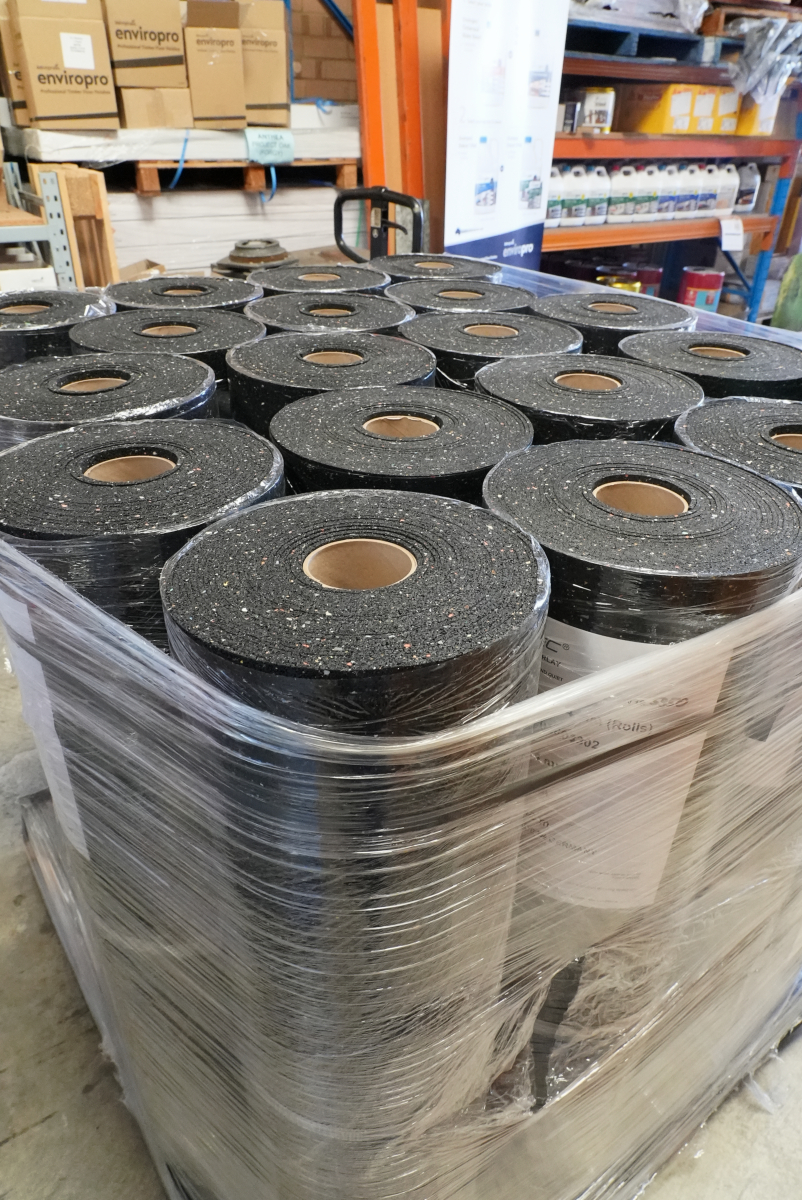
As a professional in the field of flooring installations, it is essential to understand the significance of acoustic matting in timber flooring projects, particularly in multilevel dwellings. Acoustic matting is a critical component that helps to reduce sound transmission and reflection between floors, creating a more comfortable living environment for residents.
Understanding Acoustic Matting
Acoustic matting typically consists of a rubber or rubberized layer, which may include cork, designed to create a sound-deadening barrier under the floor. This layer is essential in reducing the transmission of noise between floors, ensuring that the sound of footsteps, voices, and other noises is minimised.
The Role of Adhesives in Acoustic Matting
The adhesive used with acoustic matting plays a crucial role in ensuring a strong bond between the matting and the subfloor. A good adhesive must be able to bond strongly with the rubber or rubberized layer, providing a secure hold that prevents the matting from shifting or coming loose over time.

The Challenges of Adhesive Selection
One of the key issues with acoustic matting is the variability in adhesive testing results. Different types of matting and adhesives can produce varying results, making it essential to select the right adhesive for the job. In particular, slower-curing adhesives can be problematic, as they may not provide a strong bond quickly enough.
Best Practices for Adhesive Selection
To ensure a strong and reliable bond, it is recommended to follow the manufacturer’s guidelines for adhesive selection. If a manufacturer specifies their own adhesive system, it is essential to use that as guidance for the required adhesive type. Additionally, performing a small 24-hour test by adhering a piece of matting to concrete can help to identify any potential issues with the adhesive.
Recommended Adhesives for Acoustic Matting
PU (Polyurethane) adhesives are generally considered the best style for acoustic matting applications, due to their strong bonding properties and fast curing times. Examples of suitable PU adhesives include Sikaflex T55J, which is a popular choice among flooring professionals.
Conclusion
In conclusion, acoustic matting is a critical component in timber flooring installations, particularly in multilevel dwellings. The adhesive used with acoustic matting must be carefully selected to ensure a strong and reliable bond, minimising the risk of sound transmission and reflection between floors. By following best practices and selecting the right adhesive, flooring professionals can ensure a successful and long-lasting installation.
Recommendations for Flooring Professionals
* Always follow the manufacturer’s guidelines for adhesive selection.
* Perform a small 24-hour test to identify any potential issues with the adhesive.
* Use a PU adhesive, such as Sikaflex T55J, for optimal bonding properties.
* Ensure excellent adhesion with the chosen adhesive, as compatibility can change over time.
* Consider using a faster-curing adhesive to meet project schedules.





Leave a Reply