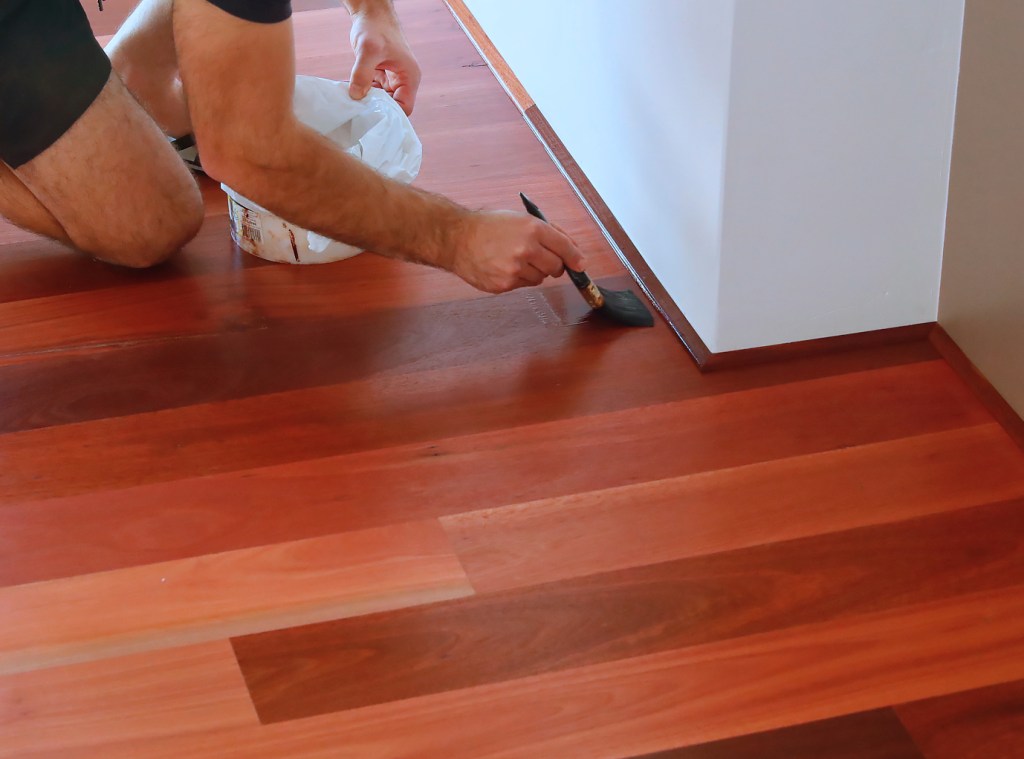
There are several approaches to DIY when it comes to timber flooring, and many of them work quite well.
Not Everything Works Everywhere
One of the problems can arise, though, when you take advice that is designed for completely different climatic conditions. For example, in houses with radiators in the Northern Hemisphere, where there is a degree of control over the highest and lowest temperatures that a floor may experience, in those climates they tend to fill between the floorboards and it makes the floor look nice and even. However, when the same advice is applied here in Australia, with the much greater range of temperatures and humidity swings, the filling between the boards comes out.
And people say, “Well, we followed this advice from this particular video or this particular source,” and the advice itself is correct; it’s just that the context doesn’t suit Australia.

Local Advice Matters
It’s for this reason that we always recommend people to come in and have a chat with us. When they’ve got DIY projects, we supply so many different products that work well in the Australian climate.
We understand the differences between how systems work with one timber but do not work with another. For example, some coatings work extremely well on light-colored timbers but don’t work particularly well on dark-colored timbers, and so people can get themselves into all sorts of trouble.
We’ve seen instances where people have been encouraged to use external coatings on internal timber and have wondered why it hasn’t lasted very long. Again, it’s simply a matter of context and understanding why certain decisions were made.
At VCS we have a long experience working with timber flooring. We’ve been involved since the evolution of the plank-on-plywood type timber floor and the direct fixed timber floor, as well as the engineered timber floor.
Engineered Floors
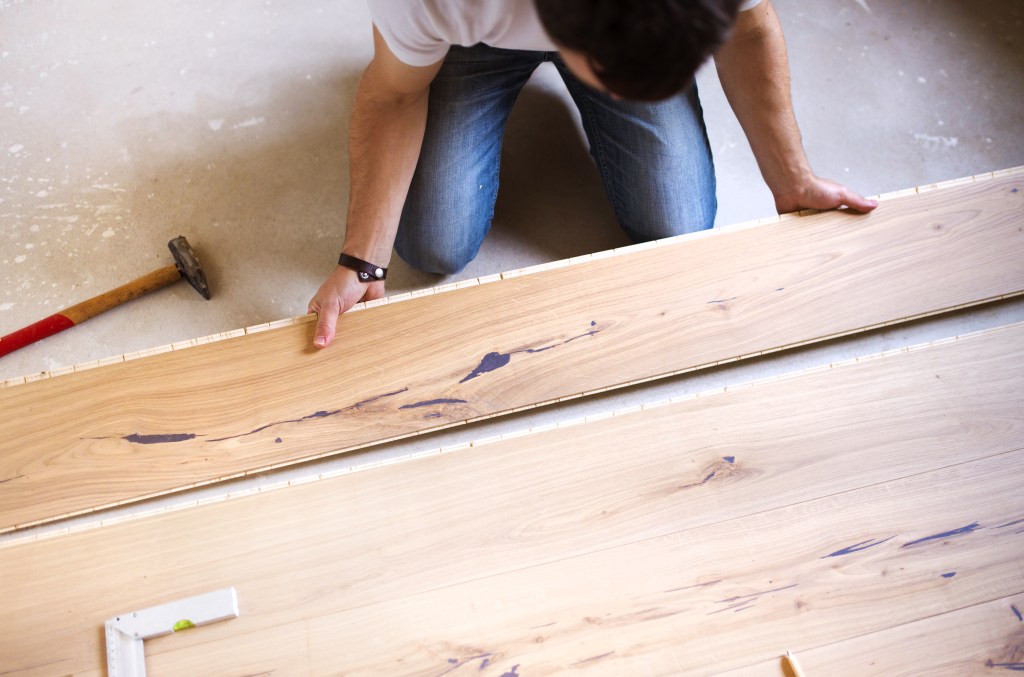
Engineered timber flooring went through quite a development phase where they were unsure what to use as the core material, and also unsure of the adhesive that they should use and the application system that should be used with the top surface. This resulted in some very interesting, unusual, and challenging situations here in Perth. Now these systems have come through to a level of maturity that makes them ideal for even very, very large flooring applications.
So, for example, in Perth we have hotels now with several thousand square meters of engineered timber floor that’s been put in place and finished beautifully using the Osmo HardWorks oil system. So many things to look at, so many systems to use, so many options. So, on the one hand, it’s good to watch videos and get advice from that sort of source. It’s also good to recognize, though, that context can make quite a difference. It’s good to know what sort of finish you should use that’s appropriate to your location.
Case Study Example
One interesting story involved a person who was given some coating that was designed for sports floors. So they thought they were on to a winner because they had a sports floor coating, and they thought that that was really good. What they didn’t realize is that this is an acrylic coating that is applied using a heavy bar applicator on sports floors and designed to last for approximately 12 months, as long as it’s not treated to too intensive wear. So they did the sanding work, they did the finishing work, they put the coating on, but the coating wore out under normal household conditions in under 6 months. Again, context matters.
That coating was designed for a specific location where it wouldn’t be subjective to normal household wear and tear. It’s just a matter of context in most cases, and that’s where companies like VCS, with very experienced people, come in.
Understanding the context can provide opportunities, and the level of information that’s needed to avoid making what may turn out to be a costly mistake.
Overview
The discussion focused on DIY timber flooring guidance and how advice that works in one climate (e.g., Northern Hemisphere homes with radiators) can fail in Australia due to wider temperature and humidity swings. Key takeaway: context (climate, timber species/color, coating type, and intended use-case) is critical to avoid premature failures and costly mistakes, and expert consultation (e.g., VCS) helps match the right product/system to Australian conditions.
Context & Climate Considerations (Australia vs Northern Hemisphere)
– Advice to fill between floorboards can work in climates with controlled indoor temperature ranges (e.g., radiators in the Northern Hemisphere) but often fails in Australia.
– In Australia’s larger temperature/humidity swings, filler between boards can break free and come out, even if the original advice was “correct” for its intended context.
Product/System Selection Risks (Timber + Coating Fit)
– VCS emphasized that different products behave differently depending on:
– Timber type and movement characteristics
– Timber color (some coatings perform well on light timbers but not on dark timbers)
– Intended environment (internal vs external)
– A recurring failure mode discussed: using external coatings on internal timber and experiencing poor longevity due to mismatch of design intent.





Leave a Reply